Grande Campeão Penny Auction
Strategic planning, Digital Marketing management, and full development of the Grande Campeão penny auction website. Website developed using the .NET framework.
Categories
Tools


Tags
The Project
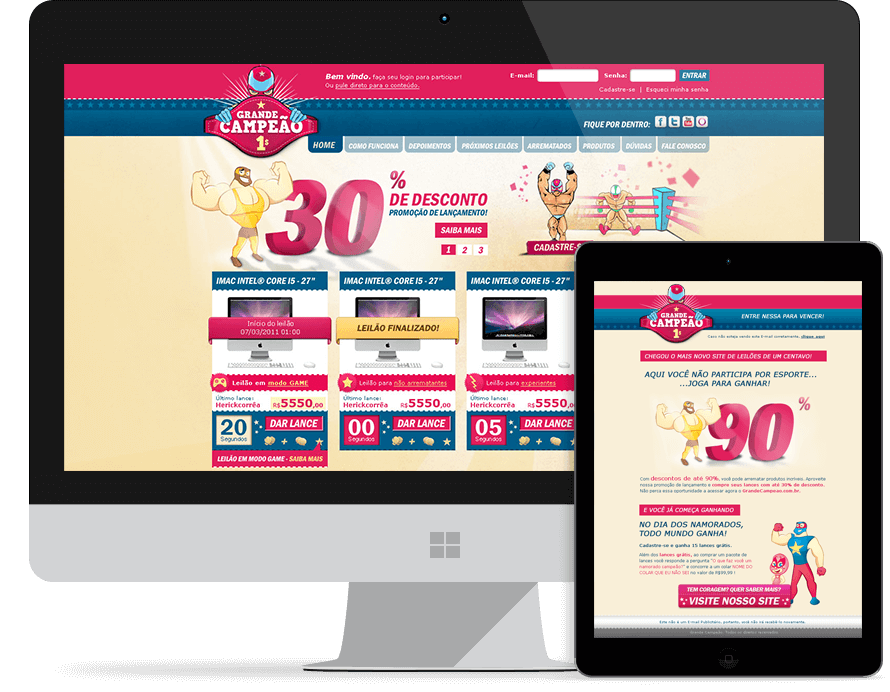
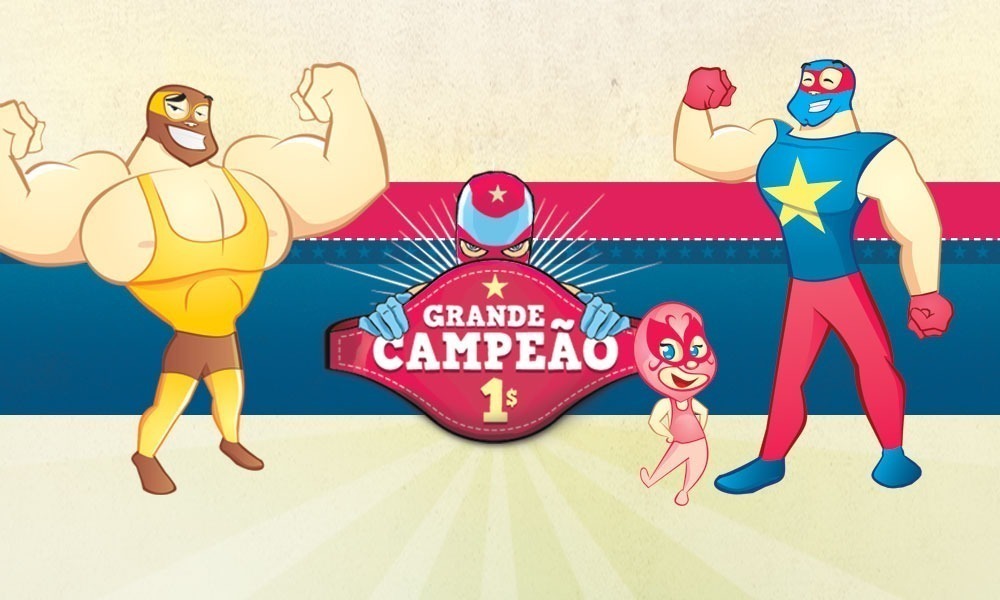
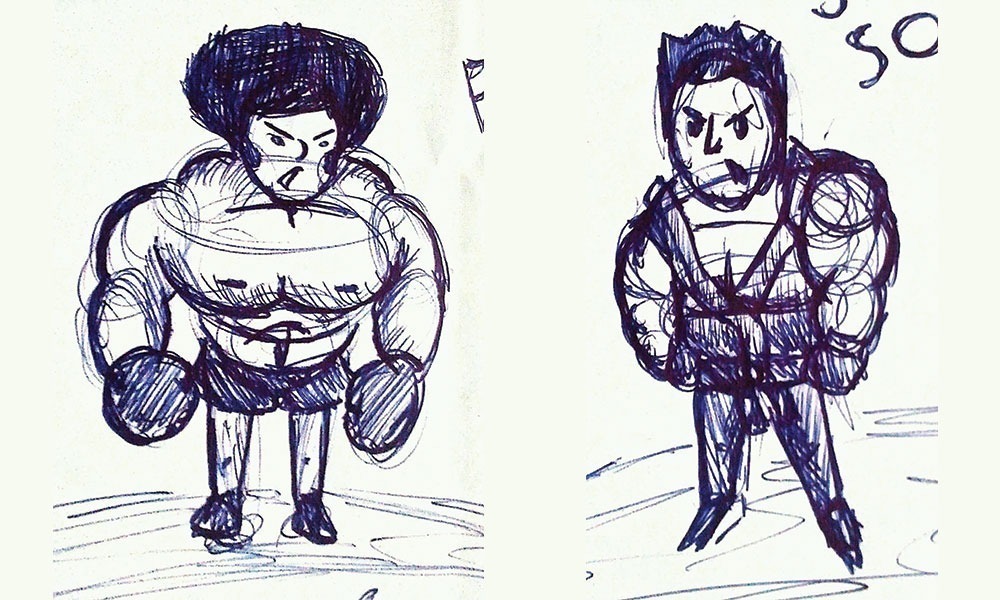
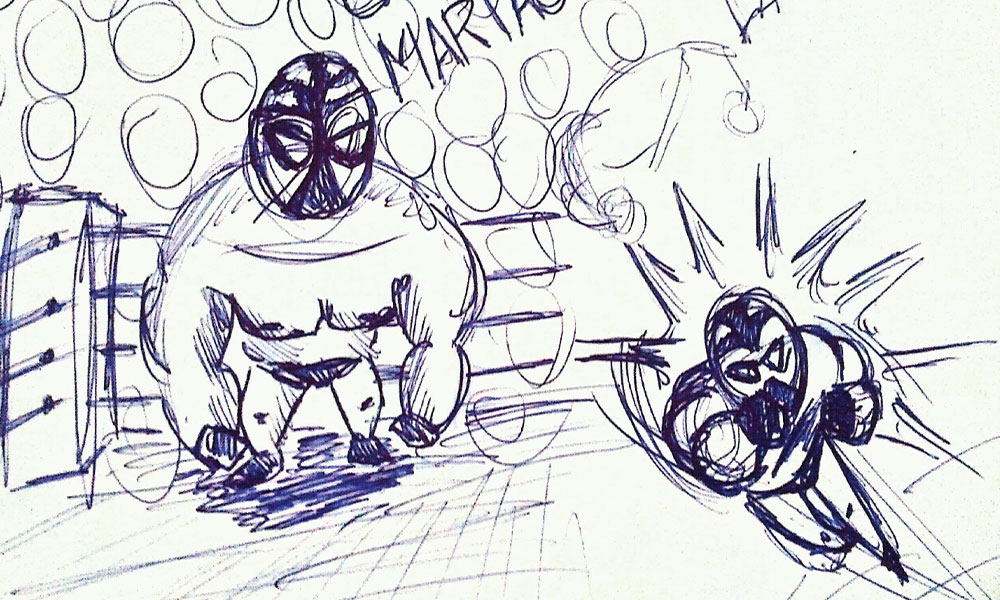
2011 was a popular (and promising) time for Penny Auction websites. Users would buy credits and place bids on products; each bid cost one cent. The product would be won by whoever placed the last bid when the timer reached zero. The website was inspired by “wrestling”-style battles, from the logo and colors to the illustrations, visually representing the competition between users for the products.
I (UX Design / Product Design), Roberto Gaspar (Planner and Marketing), and Mário Jorge (Back-end Developer) found an investor to make the purchase of products and infrastructure costs viable. With that, we decided to create our own auction website.
Desafios do projeto
1. Mechanics
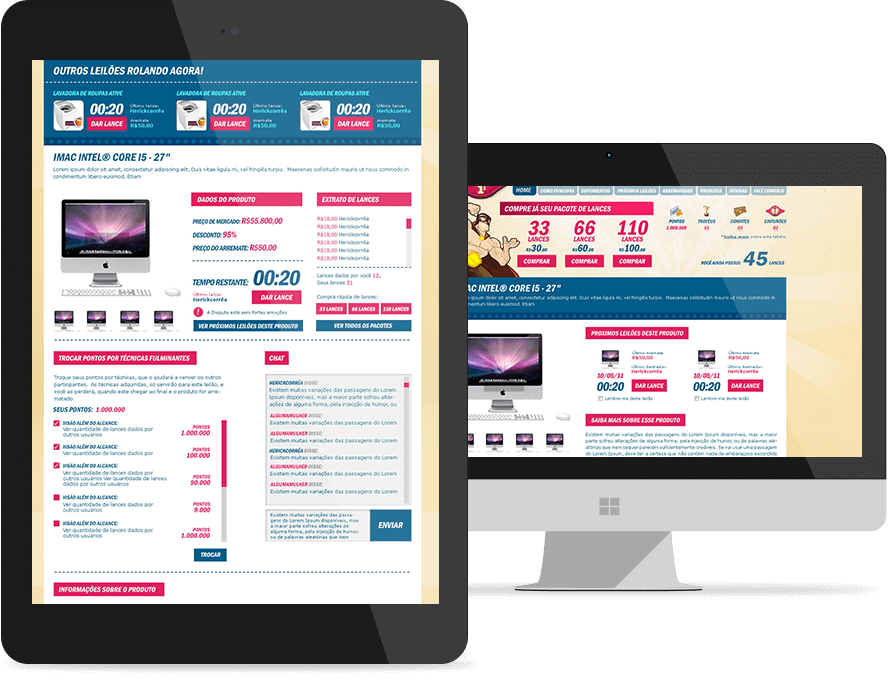
At a time when JavaScript frameworks, Node, and even ECMAScript were still emerging, much of the platform’s mechanics had to be built manually. Click events, real-time updates, real-time chat, and WebSockets required careful implementation. Therefore, this technical complexity became a major barrier to entry in this segment, as it required a highly skilled team.
2. Layout:
At that time there were many competitors. However, about 90% of them had a visual style very similar to traditional e-commerce websites and did not convey the idea of dispute or competition. For this reason, we concluded as a team that the project needed to clearly communicate battle and rivalry. The solution was to adopt a fighting theme inspired by “wrestling.” As a result, we created an interface with strong visual appeal and gamification elements, which attracted significant user attention. Consequently, popular Twitter profiles, especially those focused on “nerd” and “gamer” audiences, showed interest in participating in campaigns and partnerships with the platform.
3. Marketing
At the same time that penny auction platforms were growing, the sector was also developing a negative reputation. Many users believed that some websites used JavaScript bots to place automatic bids, preventing real users from winning and forcing them to consume credits.
Part of our marketing strategy was built directly around this user concern. We implemented public chats during auctions, allowing participants to talk in real time and confirm that real people were actually competing for the bids. On one hand, the chat generated arguments, fights, and even insults. On the other hand, this dynamic reinforced the perception that the disputes were authentic.
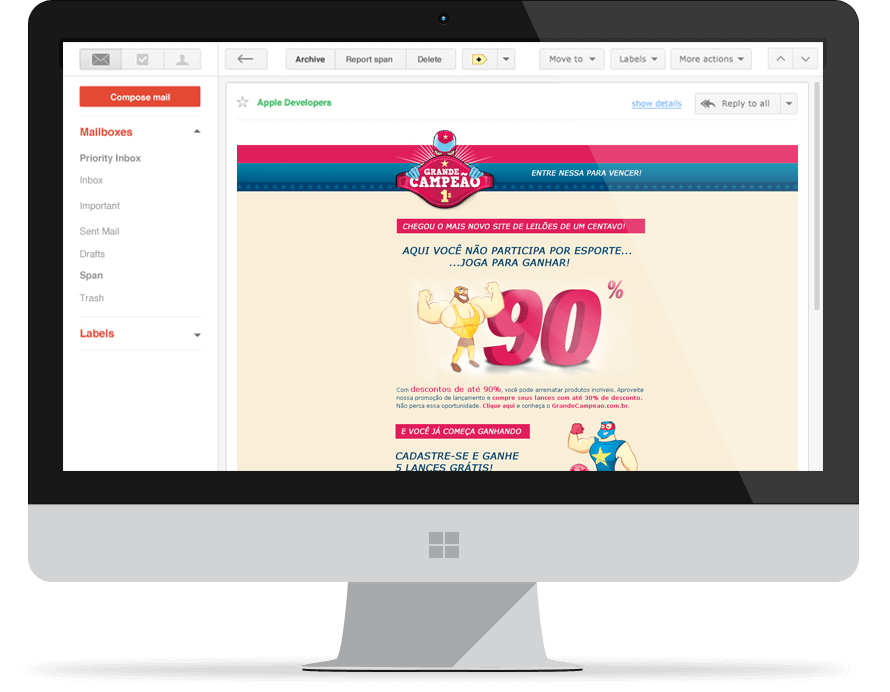
In addition, we worked on partnerships with popular Twitter profiles, ran giveaways, distributed promotional items, and created small social media contests. These actions rewarded participants with bid packages and helped attract new users to the platform.
Over time, however, public interest declined. The format stopped being a trend and, consequently, user participation dropped until the platform was eventually shut down.
The project was developed using HTML5, CSS3, and JavaScript. The core system engine was handled by another programmer. The platform structure was built using the .NET framework.