Nabismed Natural Therapies and CBD
Strategic work at Nabismed including infrastructure restructuring, security improvements, WooCommerce automations, a custom CRM, and a web app for patients, reducing costs and centralizing the digital experience.
Categories
Tools


Tags
The companies
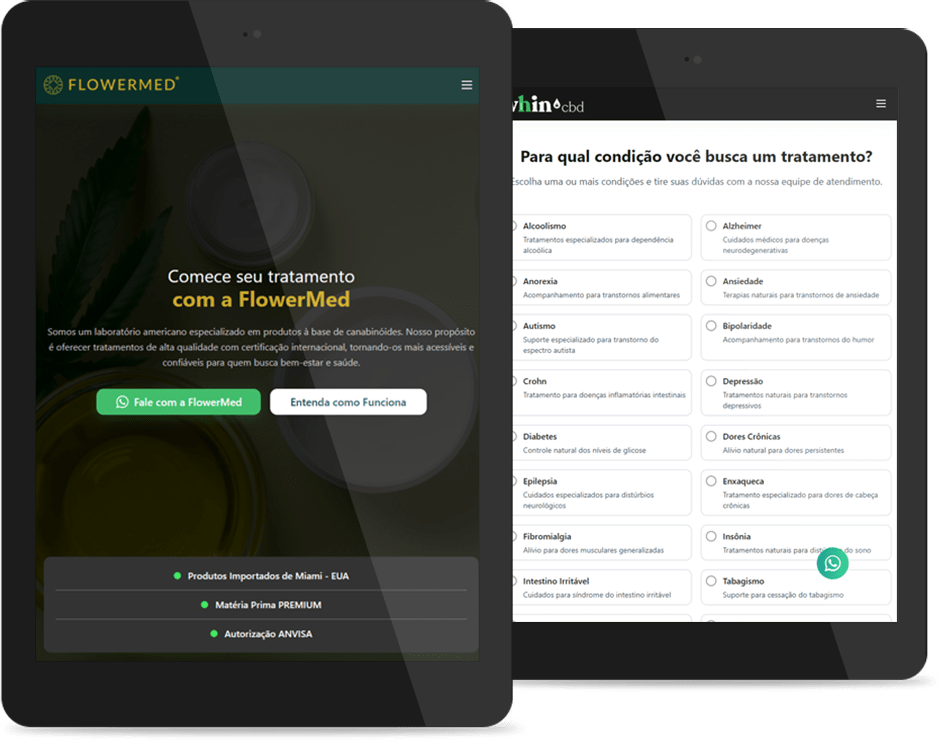
Nabismed is a company focused on consultations with specialists in natural therapies. Within its ecosystem, it brings together laboratories and import/export operations of cannabis-based products, such as FlowerMed, WhinCBD, and Sensativa. All products are shipped with a medical prescription and ANVISA authorization.




My role
Although I work as a Product Designer and UX Designer, my role goes beyond the visual layer. I also work on analyzing and improving internal processes that directly or indirectly impact the end customer experience.
Company pains and challenges
In July 2025, I started working with the companies on a part-time basis, aiming to address some critical issues identified early on:
- Lack of an efficient structure for mass communication with patients.
- No automatic updates on orders and tracking.
- Disorganization of accounts, files, permissions, and backups in Google Workspace and Drive.
- Exposure of sensitive information in WooCommerce backends.
- Lack of integration between WooCommerce, logistics, and patient documentation.
- Decentralized lead and patient data, making analysis and management difficult.
- Operational instability in platforms and critical integrations.
- Lack of continuous technical monitoring and more robust alternatives.
- Need to centralize marketing, customer service, and telemedicine into a single digital experience.
The four stages



To better organize priorities, I structured the challenges into four non-linear stages that evolved in parallel throughout the project:
- Infrastructure stabilization
- Operational organization and security
- Automation and integration of flows
- Experience, marketing, and digital centralization
1. Infrastructure stabilization

Right at the beginning of my work at Nabismed, it became clear that the problems went beyond the initial briefing and started with infrastructure:
- Domains spread across different accounts, with no centralized control;
- Infrastructure based on shared hosting with no backups;
- Fragmented automations across services like AWS and Hostinger;
- Store hosted on a paid WordPress.com account.
Main improvements
- I created a centralized document for services and access, ensuring control over previously scattered accounts and credentials.
- After research and testing, I chose a VPS on Hostinger considering cost, performance, and capacity. I configured the environment on Ubuntu and migrated the WooCommerce stores and distributed automations.
- I prioritized infrastructure with continuous backups and improved security, without significant cost increases.
- For automations, I developed a PHP service integrated with WordPress, directly connecting stores to logistics, with data validation and automatic shipment generation.
- I implemented real-time server monitoring, with alerts and automated routines to identify failures and bottlenecks.
At the end of this stage, the operation had a more solid and organized foundation, enabling further evolution with greater predictability and control. From there, I moved on to the next fronts.
With these changes alone, there was a reduction of 50% in monthly operational costs.
2. Operational organization and security

With infrastructure stabilized, the next step was to strengthen security:
- Exposed and easily indexable domains;
- Lack of internal store security;
- No firewall in place;
- Excessive access permissions;
- Unnecessary use of corporate email accounts.
This stage began with two priority actions:
- Installation and configuration of a firewall on the server, with store access restricted by IP.
- Removal of stores from main domains, replacing them with landing pages and reducing backend exposure, along with additional bot blocking.
Next, I conducted a detailed review of WooCommerce environments. Since the stores were not developed by me, I carried out a careful process to identify excesses and risks. There were many active plugins, but few were truly necessary, increasing the vulnerability surface. Cleanup was done progressively, removing unused plugins and templates.
I also reorganized access levels, clearly separating customers, sellers, and administrators. This reduced operational errors and brought more control to daily operations.
Aligned with the CFO, I reviewed the use of corporate accounts and identified that part of the team did not need this resource. This decision generated an additional cost reduction of over 30%.
With stable infrastructure, applied security, and a leaner operation, I moved on to the automation stage.
3. Logistics automation and integration flows

One of the company’s main pain points was the integration between stores and the logistics platform — in fact, this was one of the main reasons I was hired.
The previous solution was unstable and required frequent manual intervention. In addition, it used an insecure model, keeping an open port in WooCommerce for constant queries via AWS, which was neither scalable nor reliable.
After consolidating infrastructure on the new VPS, I completely redesigned this flow:
- I created a lightweight WordPress template focused only on the hooks needed to trigger automations.
- I developed an automation that captures WooCommerce orders, validates data, and automatically generates shipments on the logistics platform.
- I implemented status feedback directly within orders, allowing sellers to track progress and quickly identify possible errors.
All code was structured in a private Git repository, with reusable architecture across stores. This improved maintenance agility and consistency between environments.
This system continues to evolve, following ANVISA regulatory changes and improvements in logistics integration, including shipping updates and connections with external apps for customer tracking.
4. Experience, marketing, and digital centralization

In the final stage, I focused on structural improvements related to experience, data, and business scalability:
Identified deficiencies
- No post-sale experience: customers could not track orders without direct WhatsApp contact.
- Lack of data control: leads, prescriptions, sales performance, and inventory were managed manually.
- Heavy store front-end based on Elementor and multiple add-ons.
- Marketing lacked strategy and audience alignment.
Solutions
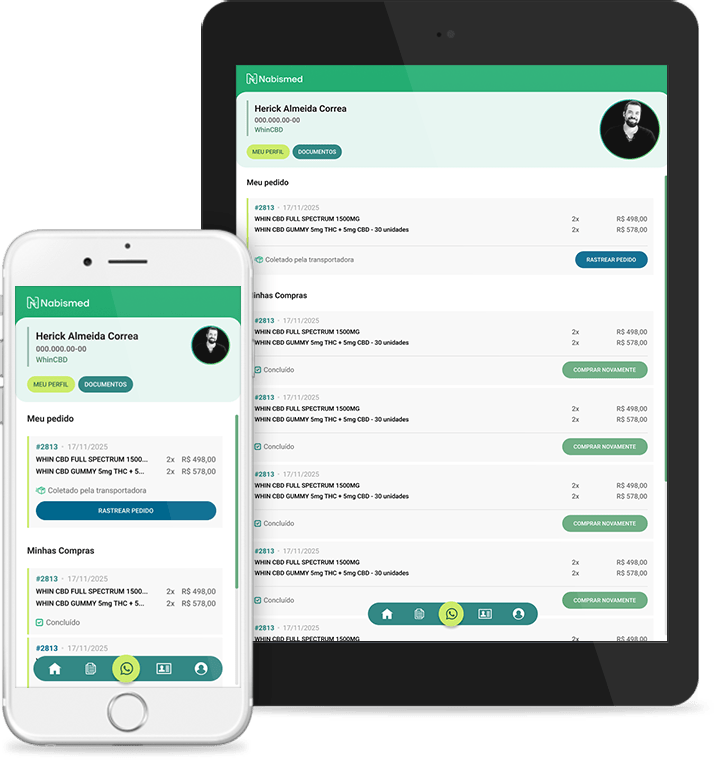
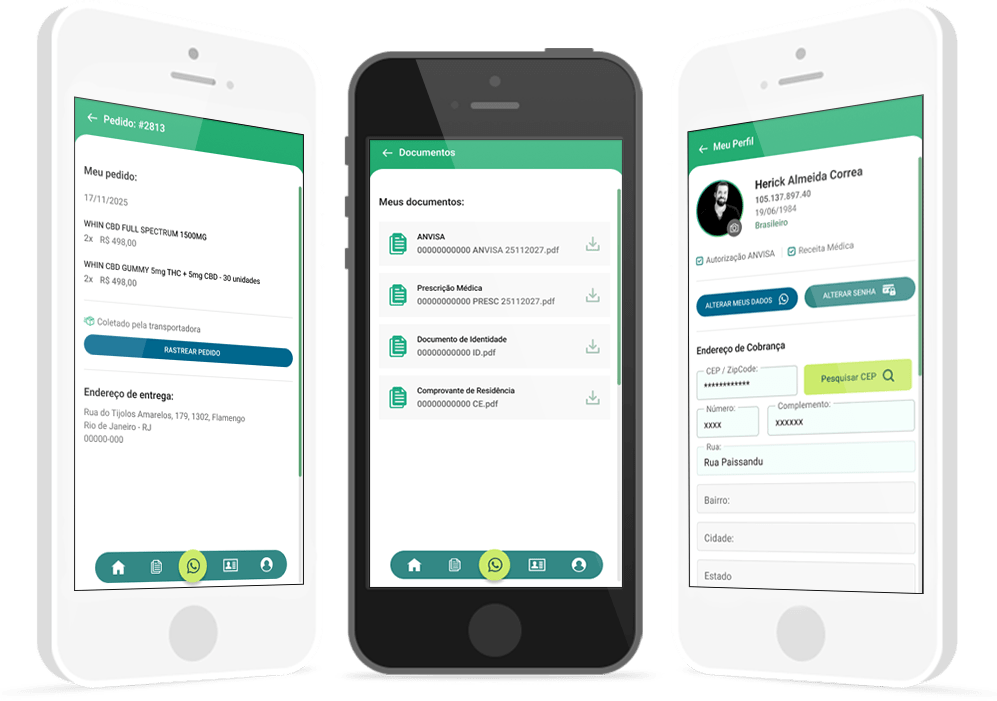
Nabismed App – Customer Area
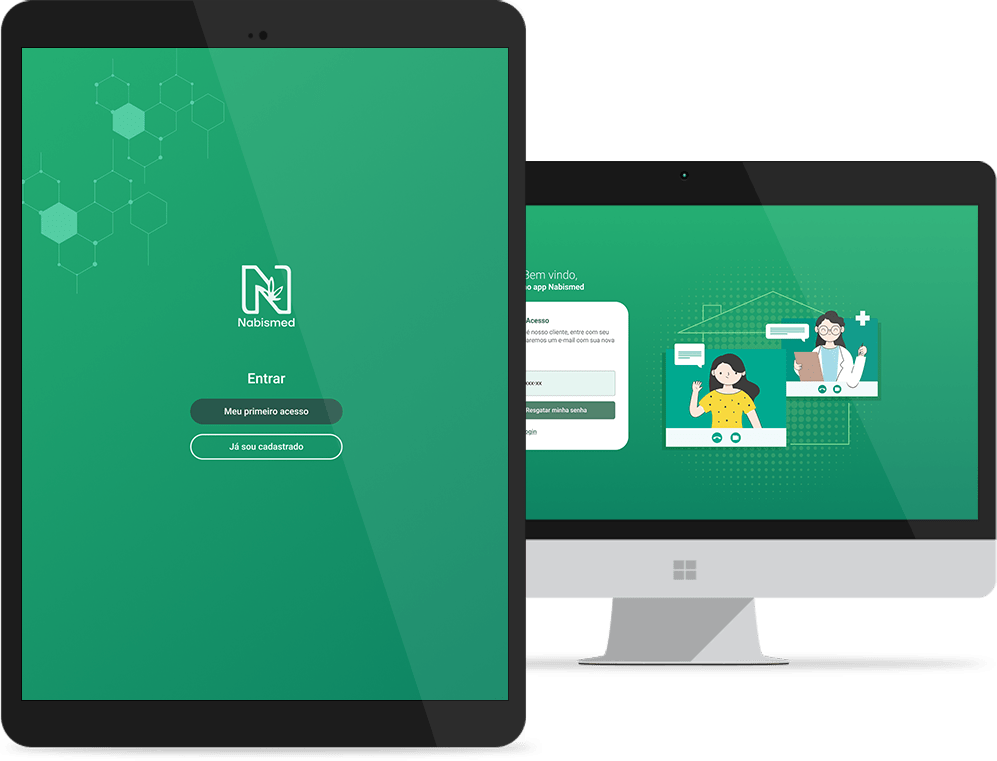
I developed a web application (PWA) that centralizes the customer experience. In it, users of FlowerMed, WhinCBD, and Sensativa can access orders, personal data, medical documents, and track delivery status in real time.
Additionally, the platform enables active communication through banners with promotions and coupons, encouraging repeat purchases.
The app was developed in React.js, with a custom PHP API. The structure was designed as a WebApp, with future potential for distribution as a native app (App Store and Google Play).
CRM
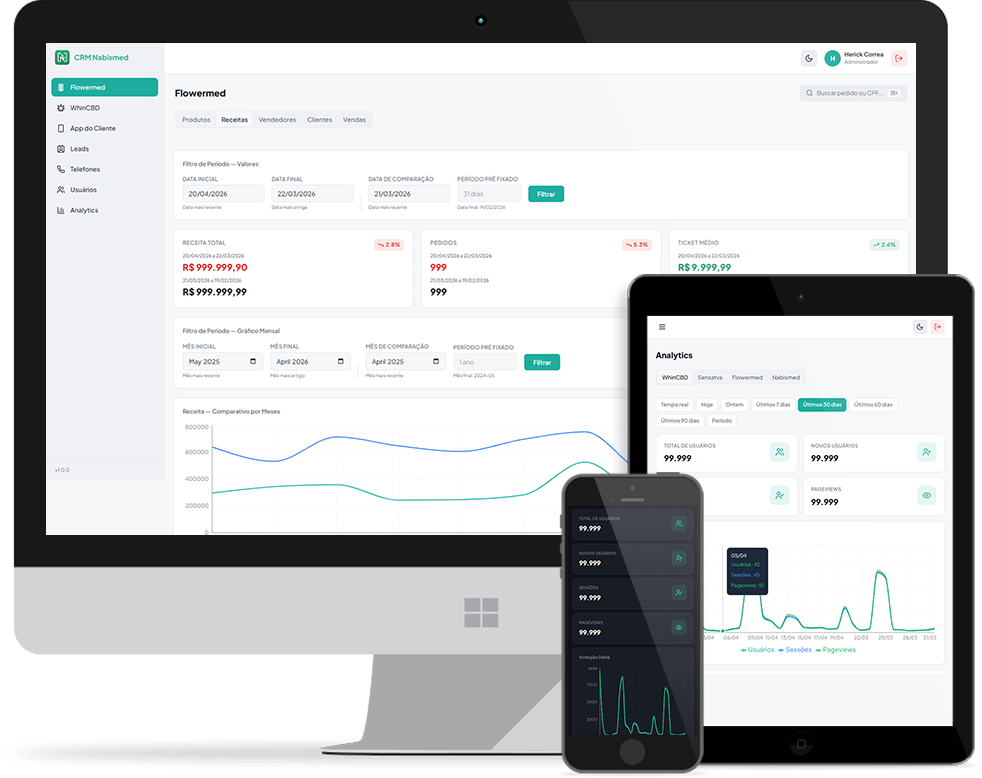
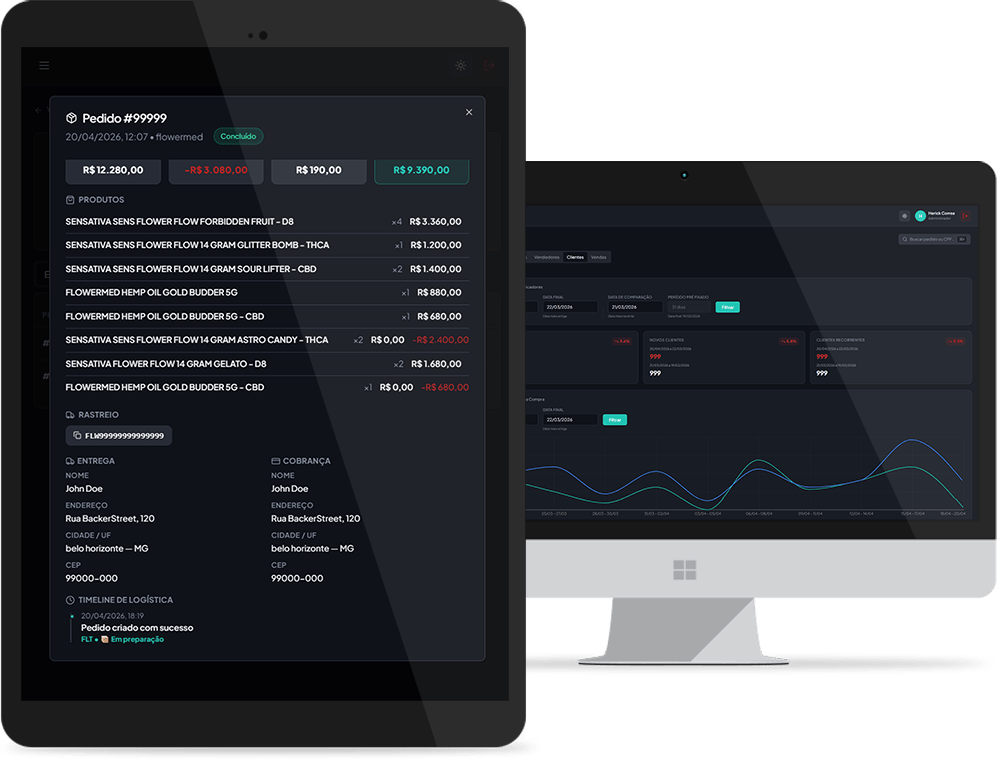
I identified a significant limitation in report generation. The CEO frequently requested manual database queries to obtain lead lists. Based on this, I proposed creating a custom CRM, connecting different points of the operation.
- Managers and teams gained access to structured reports on:
- Revenue
- Products
- Sales by product, seller, and channel
- Seller performance
- Customers
- Google Analytics data
- Campaign leads
- Nabismed App users
- WhatsApp number management
- Sellers gained quick access to complete customer history without relying on multiple WooCommerce queries.
- Lead lists could now be generated with advanced filters and exported as .xlsx files.
The CRM was developed in React.js with a custom PHP API, structured as a PWA to facilitate mobile access for stakeholders.
Marketing
In marketing, I organized efforts into three main fronts:
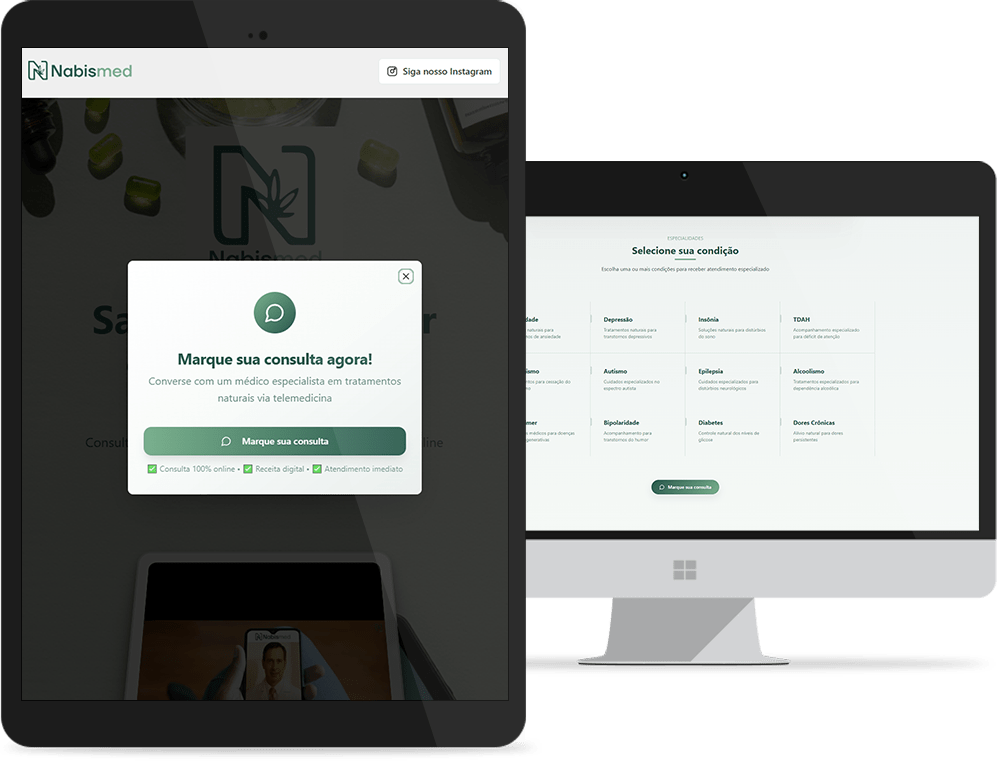
- Creation of SEO- and AI-optimized landing pages using React.js with Next.js, focused on improving campaign conversion, especially from Instagram.
- Development of an editorial automation using N8N + OpenAI (GPT) + Google Gemini + Freepik API, responsible for generating page content and feeding social networks like Facebook, X (Twitter), and LinkedIn.
- Implementation of promotional messaging automation via WhatsApp, increasing reach and sales recurrence.